
We’re used to thinking of communities as sources of data – people to be consulted, surveyed, engaged. But what if communities are knowledge creators, not just knowledge providers? What if the people experiencing an issue are best placed to research it?
When community members are trained as researchers within their own networks, something remarkable happens: conversations go to places surveys never reach, trust unlocks honesty, and the insights that emerge are grounded in lived experience rather than outsider interpretation.
Over the past year, I’ve been working on a pilot project called The People’s Report with Merri-bek City Council using Participatory Action Research (PAR) to explore discrimination in the community. Five Community Researchers were recruited, trained, and supported to design and conduct 64 interviews within their own networks. What emerged wasn’t just data, it was knowledge co-created by communities, grounded in lived experience and relationships of trust that no external engagement practitioner could replicate.
This blog is about why this matters, what we learned, and why more organisations should be working this way.
The Evolution of Community Engagement – And What’s Still Missing
Community engagement has come a long way. The sector has improved immensely over the past decade. Organisations are more deliberate about reaching diverse communities, designing culturally responsive processes, and creating multiple pathways for participation. We’ve moved beyond tokenistic consultation toward genuine efforts to include voices that have historically been excluded.
But even as our methods have improved, something fundamental remains unchanged: the power dynamic. We still largely operate within a model where professionals design the questions, set the terms of engagement, and interpret what communities tell us. We invite people into our spaces – council chambers, community halls, online platforms – and even when we go to them, we ask them to participate on our terms. We’ve gotten better at translation, at accessibility, at outreach. But we’re still fundamentally extracting knowledge from communities rather than creating it with them.
This creates predictable limitations:
Things get lost in translation. Not just linguistically, but culturally and contextually. When communities share their experiences with outsiders, there’s inevitable filtering; nuance gets simplified, cultural specificity gets generalised, and deeper truths remain unspoken because they’re difficult to articulate to someone who doesn’t share your reference points.
Comfort dictates participation. Even with improved outreach, we’re still asking people to show up in spaces that may feel foreign or formal, to engage in ways that privilege certain communication styles, to trust processes led by people they don’t know. For many, the cost of participation – emotional, cultural, practical – remains too high.
The usual voices still dominate. Better engagement reaches more people, but it doesn’t fundamentally shift who feels empowered to speak, whose knowledge is valued, or who has influence over how their contributions are interpreted and used.
Reciprocity remains elusive. We’ve improved at reporting back to communities about “what we heard,” but the relationship is still largely one-way. Communities give their time, their stories, their expertise, and in return, they might receive an honorarium for their time, but rarely the skills, networks, or agency that would enable them to continue influencing decisions that affect their lives.
What’s missing isn’t just better engagement methods. It’s a fundamentally different model – one that recognises communities not as subjects for data collection, but as knowledge creators. One that doesn’t just invite participation but redistributes authority. One where communities lead the research, ask their own questions, and generate insights grounded in relationships of trust we could never build as outsiders.
This is what Participatory Action Research offers: not an incremental improvement to traditional consultation, but a different paradigm entirely.
Enter Participatory Action Research
Participatory Action Research (PAR) shifts the traditional dynamic: rather than extracting knowledge from communities, it creates knowledge with them. When community members participate in all aspects of research, the knowledge produced is more contextually relevant, culturally appropriate, and actionable (Vaughn & Jacquez, 2020).
Why does this approach produce better results?
Deeper, more authentic insights. When research is conducted by trusted community members, participants share more openly. Community researchers bring shared cultural frameworks that enable more nuanced understanding of community experiences, preventing the misinterpretation that often occurs when outsiders analyse culturally specific knowledge (Muhammad et al., 2015).
Access to the genuinely hard-to-reach. Community Researchers engage people in familiar spaces, using culturally appropriate methods, in languages that feel most comfortable. This creates conditions for participation that traditional consultation rarely achieves (Wallerstein & Duran, 2006).
Building capacity, not just collecting data. PAR simultaneously generates knowledge and develops community skills in research, facilitation, and leadership. This creates lasting civic infrastructure that extends far beyond a single project (Cargo & Mercer, 2008).
Ripple effects beyond the project. Research shows that trust in participatory approaches generates ripple effects including sustained community partnerships, strengthened social networks, and lasting policy influence that continue beyond individual projects (Jagosh et al., 2015).
Redistributing power. PAR recognizes community members as knowledge creators, not just sources. This produces recommendations communities actually own and moves beyond extraction toward genuine reciprocity where research builds community power alongside evidence (Chevalier & Buckles, 2019).
What We Found: The People’s Report in Action
The theory is one thing. Seeing it work is another.
In The People’s Report, we recruited five Community Researchers from diverse Merri-bek communities: Pakistani, Nepalese, Vietnamese, Turkish, and Chinese backgrounds. After comprehensive training in ethics, facilitation, and research design, each researcher engaged their own networks in conversations about discrimination.
Trust Unlocked Different Knowledge
The trust factor that Muhammad et al. (2015) describe as enabling “culturally grounded interpretation” was immediately evident. As one Community Researcher reflected:
“The people were so quick because obviously there’s an element of trust. They know who I am. So the moment they had an opportunity to share, they didn’t hold back at all.”
Another noted the stark difference between insider and outsider research:
“I had two people tell me directly like, ‘If this was anyone else, good luck getting a word out of me.'”
This wasn’t just about access, it was about the quality and authenticity of what was shared. Participants disclosed experiences they wouldn’t reveal in conventional processes because the shared cultural frameworks between Community Researchers and participants created safe conditions for honest dialogue.
Broadening Reach
The project successfully engaged people who rarely participate in traditional consultation: professionals, small business owners, recent migrants, young people. Many had never heard of council engagement processes. Some conducted interviews were in Urdu and Nepalese; languages rarely accommodated in conventional engagement.
One Community Researcher captured participants’ excitement:
“They were quite excited for the research report. They had never heard about something like a research report on racism before.”
This validates Wallerstein and Duran’s (2006) finding that PAR accesses communities conventional methods cannot; not through better outreach, but through fundamentally different relationships.
Building Capacity Alongside Evidence
Community Researchers didn’t just collect data, they developed transferable skills in research ethics, facilitation, cultural safety, data analysis, and leadership. Several have since contributed to other council initiatives, creating the “lasting civic infrastructure” that Cargo and Mercer (2008) identify as a key PAR outcome.
As one Community Researcher reflected:
“This program has really set me up… developing professional relationships with members of the community that I could lean back to for feedback.”
Participants also reported increased confidence in civic participation, with survey data showing the project made them more confident to have their say on important issues and more likely to participate in future consultations.
Ripple Effects Beyond the Project
The ripple effects Jagosh et al. (2015) describe were clearly evident. Conversations sparked dialogue beyond the interviews themselves:
“They told me, after talking to me, they also discussed these things with their friends and family. It opened more conversations.”
Participants also experienced a sense of solidarity:
“Some people realised they were not alone in what they had gone through. It helped people feel more connected, like ‘oh, it’s not just me’.”
The relationships built through the project continue to shape how council engages with these communities, creating sustained partnerships rather than one-off consultations.
For the complete evaluation report, methodology details, and full findings from The People’s Report, visit here.
The Path Forward
The People’s Report proved that this approach works, even on complex, sensitive topics. It reached people conventional consultation couldn’t. It generated insights that strengthened policy. It built capacity that extends beyond a single project. And it created ripple effects that traditional engagement doesn’t.
But this was a pilot. The real question is: how do we make this standard practice?
I’m committed to doing more projects using Community Researchers, not just on discrimination, but across the range of issues where community voice matters. I’m particularly interested in working with organizations willing to experiment with sharing authority in the research process and genuinely invest in empowering communities to lead.
If you’re planning an engagement project and wondering:
- How do we position communities as knowledge creators, not just data sources?
- How do we create engagement grounded in trust and shared cultural understanding?
- How do we build genuine reciprocity, not one-way consultation?
Then this methodology might be for you.
It requires investment in training and genuine collaboration. It requires courage to share control over research processes. And it requires commitment to work with communities as knowledge creators.
But the payoff is significant: deeper insights, lasting community capacity, more legitimate policy, and sustained partnerships that extend far beyond individual projects.
Want to Talk?
I’d love to discuss how Community Researcher approaches might work for your next engagement project. Whether you’re in local government, state agencies, or community organisations, if you’re grappling with how to genuinely center community voice in decision-making, let’s explore what’s possible.
Contact me at hello@publicvaluestudio.com
References
Cargo, M., & Mercer, S. L. (2008). The value and challenges of participatory research: Strengthening its practice. Annual Review of Public Health, 29, 325-350.
Chevalier, J. M., & Buckles, D. J. (2019). Participatory action research: Theory and methods for engaged inquiry (2nd ed.). Routledge.
Jagosh, J., Bush, P. L., Salsberg, J., Macaulay, A. C., Greenhalgh, T., Wong, G., … & Pluye, P. (2015). A realist evaluation of community-based participatory research: Partnership synergy, trust building and related ripple effects. BMC Public Health, 15(1), 725.
Muhammad, M., Wallerstein, N., Sussman, A. L., Avila, M., Belone, L., & Duran, B. (2015). Reflections on researcher identity and power: The impact of positionality on community based participatory research (CBPR) processes and outcomes. Critical Sociology, 41(7-8), 1045-1063.
Vaughn, L. M., & Jacquez, F. (2020). Participatory research methods: Choice points in the research process. Journal of Participatory Research Methods, 1(1).
Wallerstein, N. B., & Duran, B. (2006). Using community-based participatory research to address health disparities. Health Promotion Practice, 7(3), 312-323.
About the author
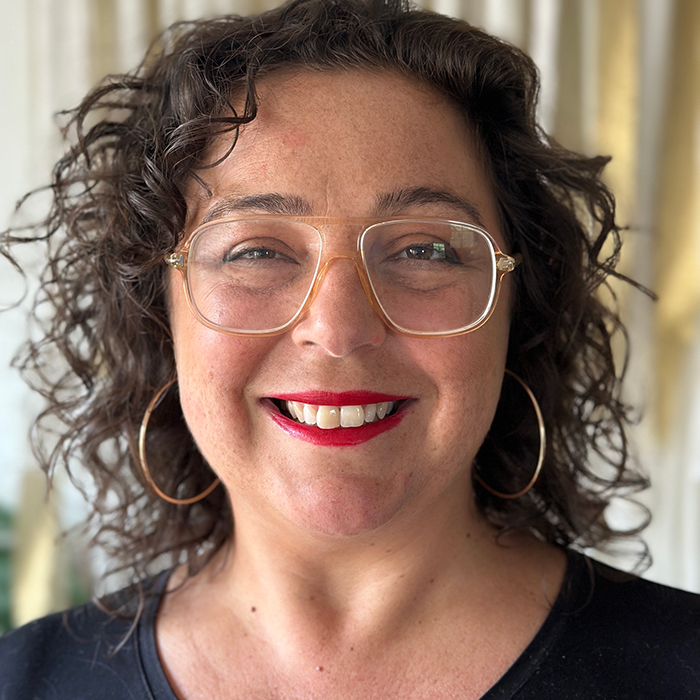
Dr Emanuela Savini
Emanuela is both a researcher and practitioner, dedicated to supporting people to participate in decisions that affect their lives and to create the change they want to see in their communities. She founded Public Value Studio as a space for expanding civic participation and now leads its work as Director.