
This year, I had the privilege of convening the Strengthening Democracy: A Research-Practice Exchange Seminar Series through the Centre for Deliberative Democracy – eight sessions that brought together academics and practitioners to explore the complex challenges facing democracies today.
Each session was designed around a simple but powerful premise: that the most innovative solutions emerge when research insights meet practical experience. My wonderful colleagues at the Centre each moderated sessions, creating space for genuine exchange rather than one-way knowledge transfer. The result was a series that covered remarkable ground, revealing just how many forces are shaping democracy right now and how many different perspectives we need to strengthen it.
All sessions were recorded and are available to watch. Whether you’re a practitioner looking for fresh approaches, a community member curious about democratic innovation, or simply someone who cares about the health of our democracies, there’s something here for you. Below is an outline of each of the sessions with a link to the recordings at the end.
March: Tackling mis- and disinformation in democracy
This session explored one of the most pressing challenges facing democracies worldwide. The conversation examined how false and misleading information spreads, its impact on public trust and decision-making, and what strategies – from media literacy to platform design to community-building – might help us navigate an increasingly complex information environment.
April: In democratic practice, does research matter?
A meta-conversation that asked a crucial question: when public servants are making policy decisions, how much does academic research actually inform what they do? This session grappled honestly with the gap between research and practice, exploring when research is useful, when it’s not, and how we might better bridge these worlds.
May: Dear ChatGPT, what is democracy?
As artificial intelligence becomes more embedded in our daily lives and decision-making systems, this session examined what AI means for democratic practice. The discussion explored how AI tools are being used in civic processes, the risks and opportunities they present, and what it means for democracy when algorithms increasingly mediate our political information and participation.
June: Democratic representation in a multicultural society
How do we ensure that diverse communities are genuinely represented in democratic processes? This session tackled questions of inclusion, voice, and power in multicultural contexts, examining both the challenges of representative democracy in diverse societies and innovative approaches to ensuring all communities can participate meaningfully.
August: Expanding the demos: how do non-humans have political agency?
This session pushed beyond traditional boundaries to ask how we account for non-human actors – from animals to ecosystems to future generations – in our democratic systems. The discussion explored emerging approaches to representation that recognise our interdependence with the more-than-human world.
September: Transforming public input into policy impact
How does public participation actually influence policy decisions? What does it take to move from consultation to genuine impact? This session examined the critical pathway from community engagement to policy change, exploring the barriers and opportunities that determine whether public input shapes the decisions that affect people’s lives.
October: Democratic innovation or expensive boondoggle? The value of mini-publics in theory and practice
Citizens’ assemblies, juries, and panels have proliferated in recent years, but do they actually deliver democratic value? This session was an honest exploration, and assessment, of mini-publics – when they work, when they don’t, what they cost, and whether they’re worth the investment.
November: Enhancing democracy through creative practices
The final session explored how arts, storytelling, and creative approaches can reimagine democratic participation itself. What does democracy feel and taste like, in our bodies, our relationships, and across our differences? The conversation explored how creativity, care, and intersectionality can help rewild democracy, opening up new possibilities for how we participate together.
What’s next?
The beauty of this series has been its breadth – showing us that democracy isn’t one thing facing one challenge, but a complex ecosystem that needs attention from many angles. I’d love to hear what you think should be part of the conversation next year.
You can explore all the sessions and watch the recordings at www.delibdem.org/seminar-series.
About the author
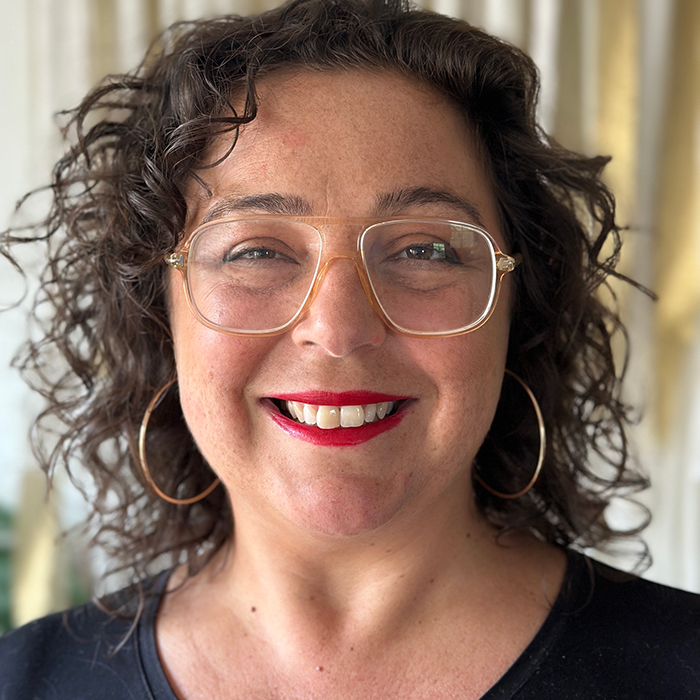
Dr Emanuela Savini
Emanuela is both a researcher and practitioner, dedicated to supporting people to participate in decisions that affect their lives and to create the change they want to see in their communities. She founded Public Value Studio as a space for expanding civic participation and now leads its work as Director.