
The purpose
The People’s Report model was created to work with communities, centring community members as experts in their own lives. By drawing on people’s intimate knowledge, lived experience, and local connections, it offers a deeper understanding of how challenges are experienced day to day, and surfaces solutions that are grounded in reality and possibility. Built on trust and reciprocity, the project recognises that the most powerful ideas for change often come from those closest to the issues.
In this pilot project, we partnered with Merri-bek City Council to inform its Human Rights Policy, with a particular focus on community-led action to address discrimination. We wanted to understand not only what forms of discrimination were being experienced in the community, but how they were lived, and what kinds of solutions people themselves saw as meaningful. At its heart, the project aimed to connect evidence with lived experience, so that future action would be shaped by the wisdom and priorities of the community itself.
Our approach
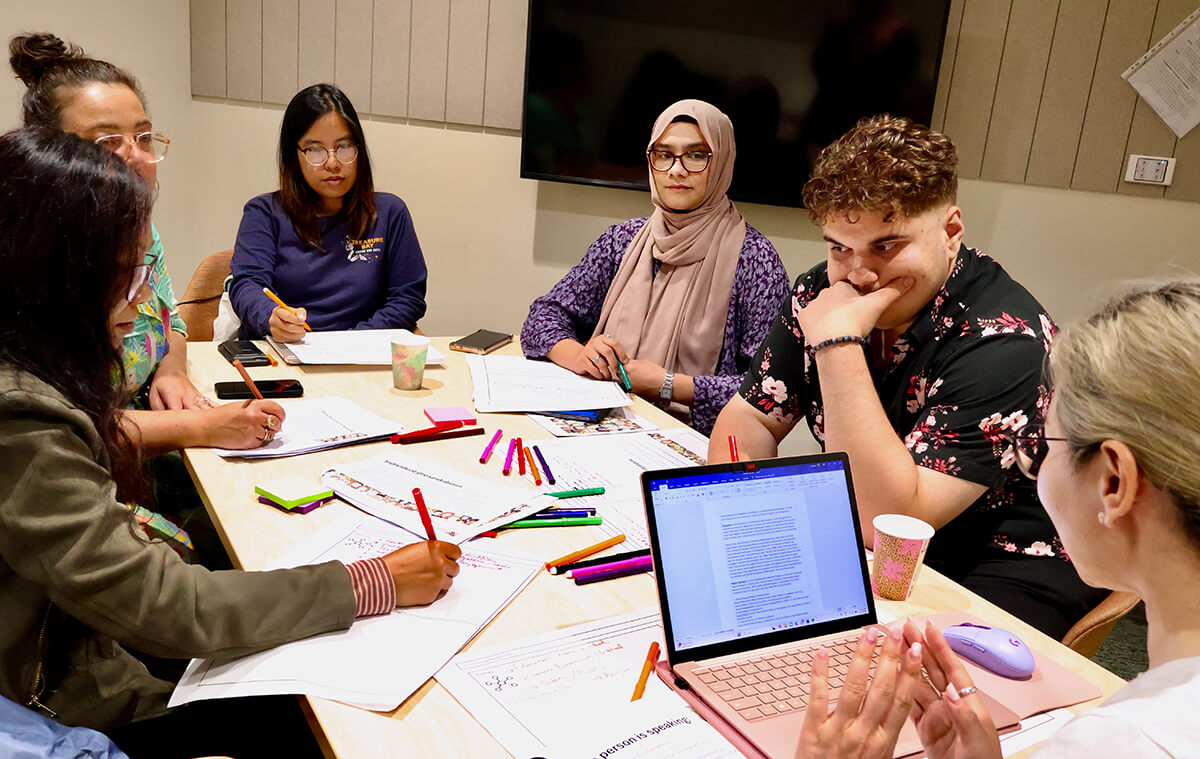
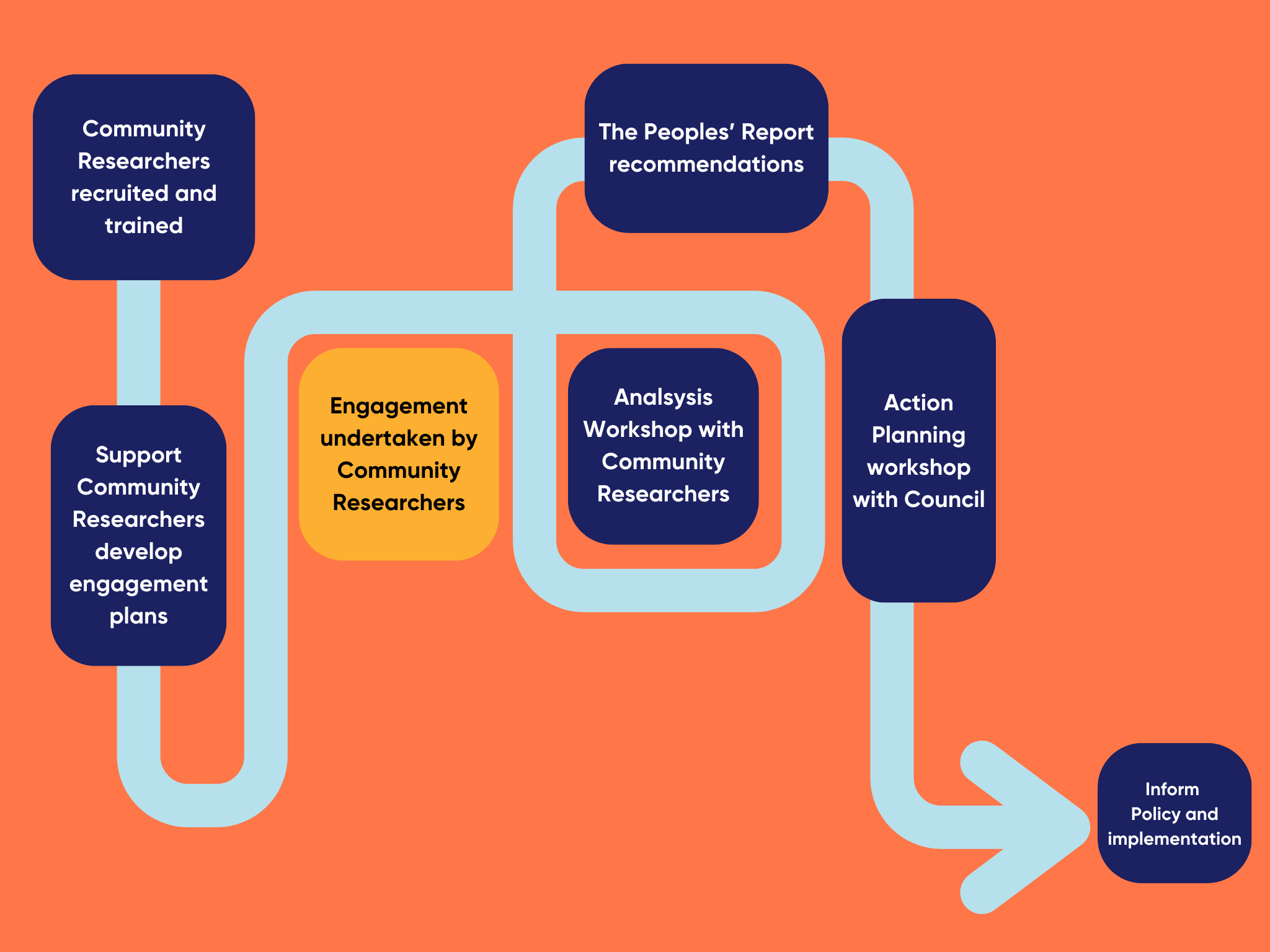
The People’s Report uses a community researcher model, which shifts the balance from research on communities to research with communities. Local residents are recruited, trained, and supported to act as Community Researchers, drawing on their own relationships of trust, cultural knowledge, and lived experience. Because they are embedded within their communities, they can have richer, more open conversations that reach people who are often missed by traditional consultation methods.
For this pilot in Merri-bek, five Community Researchers were trained in ethical research, facilitation, and analysis. Each developed an engagement plan tailored to their networks, then led conversations in the languages, spaces, and ways that felt safe and relevant. They later came together to analyse the findings collectively, identify common themes, and agree on recommendations. This collaborative process gave weight to diverse perspectives while ensuring shared ownership over the final report.
This approach not only generated deeper and more authentic insights into how discrimination is experienced, but also built capacity for leadership and civic participation within the community itself. By recognising community members as experts, the model fostered reciprocity, mutual respect, and a stronger connection between Council and its communities.
Outcomes
The pilot of The People’s Report in Merri-bek generated outcomes at several levels: for Council, for the community, and for the Community Researchers themselves.
For Merri-bek City Council, the project provided fresh and detailed insights into how discrimination is experienced in daily life. Because these insights were generated through trusted community networks, they revealed perspectives and nuances that Council would not have been able to access through traditional engagement. The recommendations in the report directly informed the revision of the Human Rights Policy and Social Cohesion Plan, grounding them more firmly in lived experience.
For the community, the project created a rare opportunity to speak openly about difficult issues in spaces of trust and safety. Participants reported feeling heard, valued, and more connected to their local community. The process fostered a stronger sense of belonging and sparked conversations that extended beyond the formal engagement, with participants discussing issues of discrimination and inclusion with friends, families, and networks.
For the Community Researchers, the project offered meaningful professional development. They gained skills in facilitation, ethical research, interviewing, and analysis, while also building confidence as community leaders. Several reflected that the experience strengthened their capacity to contribute to civic life and opened up new professional or volunteering pathways.
More broadly, the pilot demonstrated that a community-led research model can produce more authentic insights, build civic capacity, and generate recommendations that are both grounded in community experience and relevant to policy. It also showed the potential of this model to be applied to other areas of Council decision-making, offering a replicable way to place community voices at the centre of shaping change.
You can find Community Researcher’s Report here, and the Project Evaluation Report here.
Similar projects
This was a pilot project, and we see great potential for applying this model more widely!
We’d welcome conversations with anyone interested in collaborating.